A Centre of Vocational Excellence (CoVE) brings together schools, companies and governmental organisations in a specific region and sector, the so-called skills ecosystem. Since each region is different, with its own issues, developments and cultural aspects, there is no one-size fits all solution. Instead, each Centre of Vocational Excellence has its own development process, tailored towards the skills ecosystem the Centre is operating in.
In order to provide guidance and structure, the Platform of Vocational Excellence Water has developed a roadmap towards a Centre of Vocational Excellence, outlining various phases all Centres will have to go through. On this page you find these steps, with tools for each phase. This roadmap is based on the experience of the Platform of Vocational Excellence during the development of our five region Centres of Vocational Excellence and the pan-European Platform of Vocational Excellence Water.
Create an overview of all stakeholders, including the key partners for the Centre of Vocational Excellence.
Create a list of needs of the skills ecosystem, that feed into the value proposition of the Centre of Vocational Excellence, checked and validated with the stakeholders.
In this phase you will collect information about your skills ecosystem, answering questions like:
Which stakeholders are active in the skills ecosystem? How do they relate to each other?
What are developments in my skills ecosystem?
What are the characteristics of the stakeholders in my skills ecosystem?
What are the needs of the stakeholders in my skills ecosystem?
What is the ‘why’ or reason of existence of my Centre of Vocational Excellence?
What information do I already have and what are my knowledge gaps?
Tools to use:
Stakeholder Analysis. This tool helps you align your organization’s work with your stakeholders’ needs.
PESTLE Scan. This tool helps by assessing the different external forces that can impact your organisation. You can better plan your strategies, mitigate risks, and prepare for the future.
Create an overview of the target groups of your Centre of Vocational Excellence, like students, teachers, SMEs, etc.
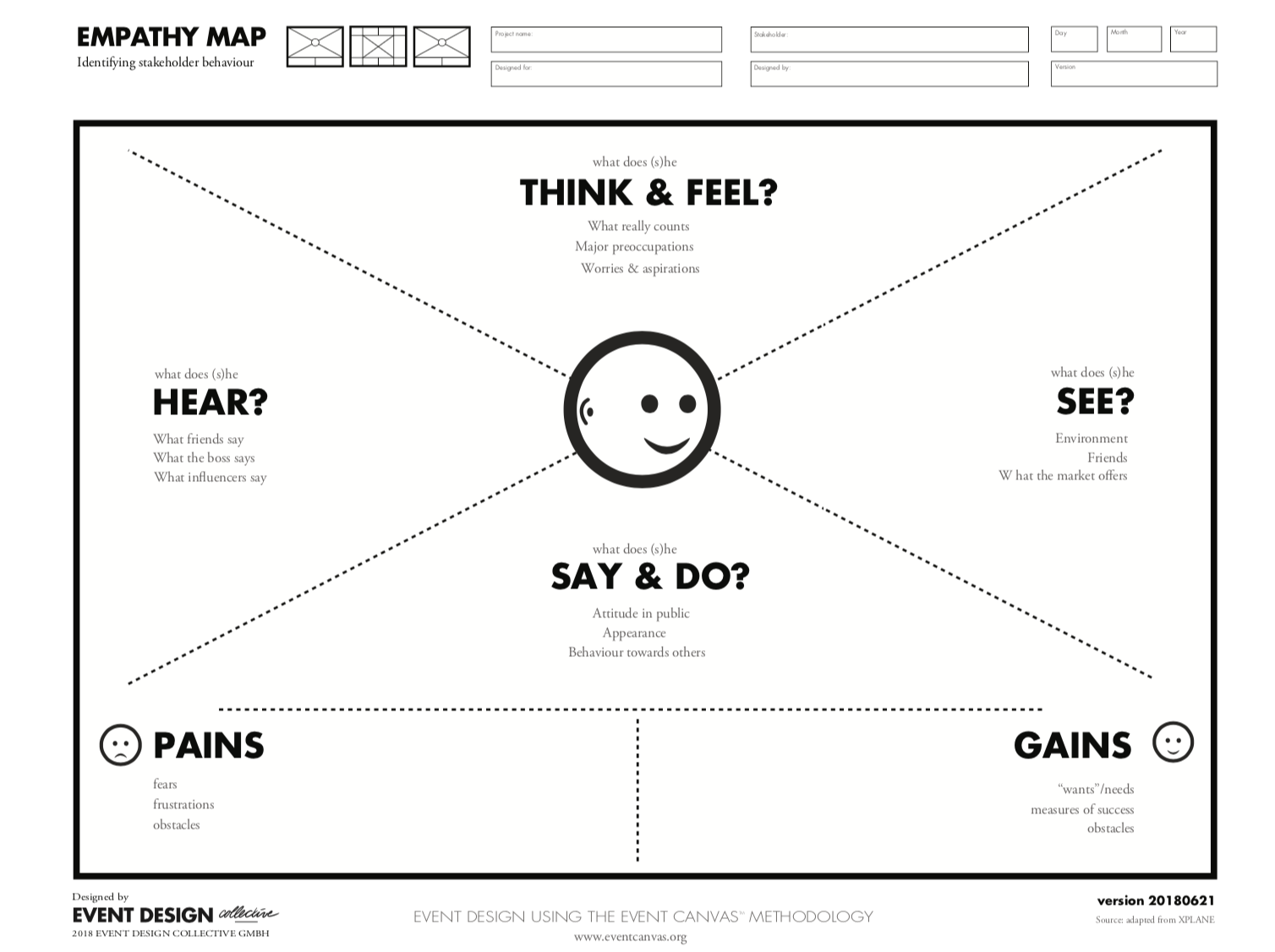
Create an empathy map of each of your target groups.
Tools to use:
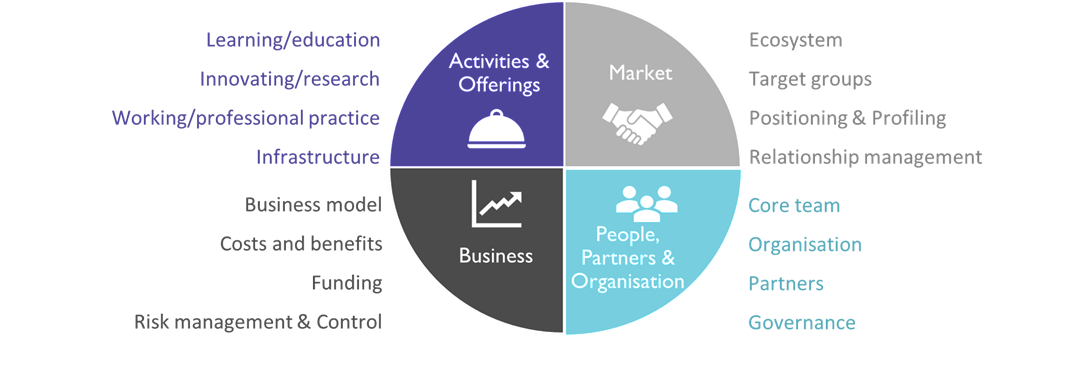
Business Model Canvas. This tool helps you to structure the development of your Centre of Vocational Excellence. You will be able to map all essential elements in a visible way. You can use this as a template.
Empathy Map. With this tool you gain a more intimate understanding of the people who will benefit from the activities in your Centre of Vocational Excellence. Watch the video below for further explanation.
Create a list of needs, translated into concrete propositions and activities.
Create an overview of the key resources and partners needed to execute those activities.
Tools to use:
Business Model Canvas. Keep using and updating the Business Model Canvas from phase 2.
Project Format. This tool helps you to create a concrete action plan.
Building Blocks for Partnerships. Based on the information you gathered in the previous two phases you will now start translating the needs from the skills ecosystem into concrete actions, the propositions of your Centre of Vocational Excellence. The activities can be categorized in six so-called Building Blocks for public-private partnerships.
Gain insights in how to engage with your different target groups, resulting in approach strategies that fit the characteristics of the target group.
Establish warm relations with your target groups.
Tools to use:
Workshops. In order to execute the activities you have identified in phase 3, you need to communicate with your target groups. On the one hand to inform them about the activities, on the other hand to ensure that the activities are in line with their needs whilst you develop them. You can use a combination of the following workshops to do so:
Workshop ‘how to involve SMEs’, on how to involve more SMEs in your public private partnership.
Workshop ‘Storytelling’, on how to tailor your story to your audience?
Workshop ‘Communication strategies’, on how to choose the right communication strategy, fitting your target group.
Workshop ‘account management’, on how to manage your stakeholders.
Interested in learning more about our workshops? Don't hesitate to get in touch by emailing us at hello@wearekatapult.eu.
Gain insights in how to engage with your different target groups, resulting in approach strategies that fit the characteristics of the target group.
Gain insight in the cost structure and revenue of your activities.
Tools to use:
CoVE Water Blueprint. This document is an example cooperation agreement or MoU for public-private collaboration in VET and professional education. It can be adjusted to the situation as needed and used as a basis for new cooperation agreements, outlining partner roles and activities based on your proposals, partners, and target groups.
Project Format. Revisit this tool used in phase 3 for new and altered activities.
Phase Model for Public Private Partnerships. This model distinguishes five different phases of development. Within a platform of Centres of Vocational Excellence, regions can be in various phases of development or maturity. The Phase Model by Bell Mason can be useful to appreciate these differences and ensure the mutual learning between the various CoVEs.
Ask feedback on your own Centre of Vocational Excellence by peers from other Centres.
Gain shared knowledge, experiences and insights from other Centres of Vocational Excellence, that can serve as input for your own Centre.
Tools to use:
Peer Review Model. Working on a Centre of Vocational Excellence is not a straight forward task. The Peer review model is a structured way of both sharing the inner workings of your partnership with 2 or 3 other Centres and looking behind the scene at other partnerships to see what works for them. The power of this method lies in sharing knowledge, experiences and insights, with a focus on mutual learning.
Validation of activities and proposition of your Centre.
Implement recommendations from the Peer Review.
Make adjustments to the Business Model Canvas.
Develop new activities.
Tools to use:
Business Model Canvas. Keep developing your Business Model Canvas based on all the previous phases: for the Centre and for the activities in the building blocks. Continue to share the Canvas with peers and network partners to validate, for feedback and to involve them in the ongoing development.

 Introduction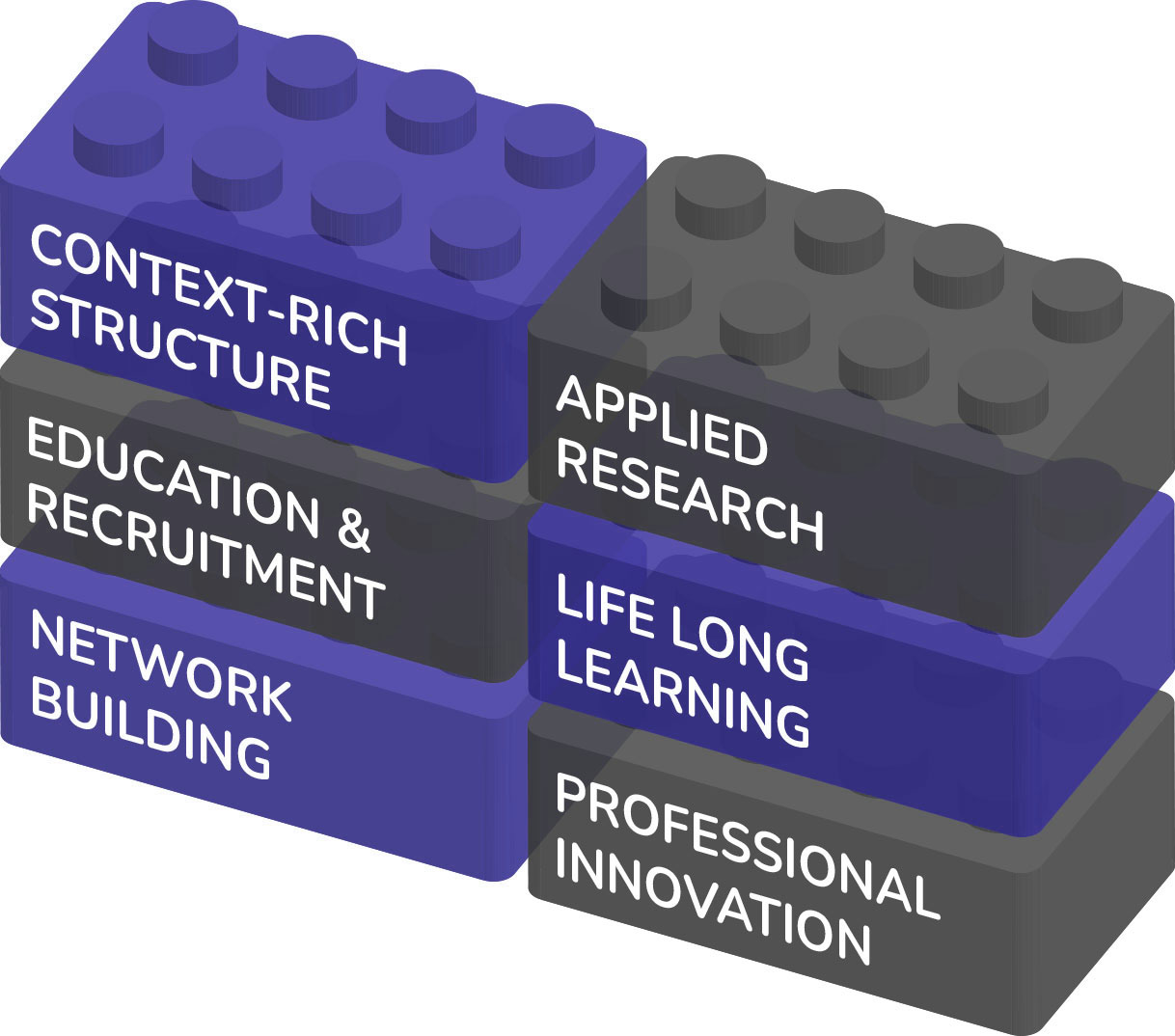


 © 2025 Katapult. All rights reserved.